
Solar Water Heaters in Dubai, UAE
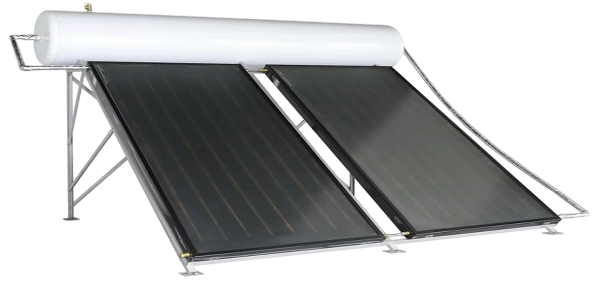
Our solar water heaters utilize renewable solar energy to provide hot water in an eco-friendly and cost-effective manner. By capturing sunlight through solar collectors and storing it in insulated tanks, these systems reduce dependence on traditional energy sources and lower utility bills, making them ideal for both residential and commercial use.
Climatech also handles solar water heater installation across Dubai and the UAE, from single villas to commercial projects.
Key Features:
High-Efficiency Solar Collectors: Utilizing state-of-the-art flat-plate or evacuated tube collectors, our system
maximizes solar absorption, ensuring rapid water heating even in varied weather conditions.
Integrated Backup Heating: For periods of low sunlight, the Climatech Solar Water Heater includes an optional electric
or gas backup system, guaranteeing a consistent hot water supply year round.
Environmentally Friendly: By leveraging renewable solar energy, our system significantly reduces greenhouse gas
emissions and reliance on fossil fuels, contributing to a sustainable future.
Applications:
Residential Use: Provide your household with a reliable and cost-effective hot water solution, enhancing comfort and
reducing utility bills.
Commercial Use: Ideal for hotels, restaurants, and other businesses requiring substantial hot water, our system offers
an efficient and sustainable alternative to traditional water heating methods.
Experience the benefits of renewable energy with the Climate Solar Water Heater, a smart investment for both your
property and the environment
How a solar water heating system works
A solar water heater has three parts that matter: a collector on the roof that absorbs solar energy, a storage tank that holds the heated water, and a means of moving water between the two. Everything else is control and protection.
The collector is either a flat plate, which is a glazed insulated panel containing an absorber, or an evacuated tube array, where each tube is a vacuum sealed cylinder. Flat plate collectors are robust, cheaper and perform well in a hot sunny climate. Evacuated tubes lose less heat to the surrounding air, which is a bigger advantage in cool climates than it is here, though they can be the better choice where roof space is tight because they deliver more output per square metre.
Direct and indirect systems
In a direct system the water you use is the same water that passes through the collector. It is simple and efficient. Its weakness is water quality: whatever is in the supply passes through the collector and scales it up over time, which matters a great deal in this region.
In an indirect system a separate fluid circuit runs through the collector and transfers its heat to the stored water through a coil or heat exchanger. The potable water never enters the collector. That protects the collector from scale and allows the circuit fluid to be chosen for the conditions. Indirect systems cost more and are marginally less efficient, and they are frequently the better long term decision on hard water supplies.
Choosing between thermosiphon and pumped
Thermosiphon systems have no pump and no electricity requirement for circulation. Hot water rises naturally to a tank mounted above the collector. They are simple, cheap and there is very little to fail. The constraint is architectural: the tank must sit above the collector, which means it is visible on the roof.
Pumped systems circulate with a small pump under the control of a differential controller, which allows the tank to sit at ground level, in a plant room or indoors. That flexibility is why pumped systems are usual on larger buildings, on properties where roof mounted tanks are not acceptable visually, and wherever the hot water demand needs a tank larger than a roof structure should carry.
The trade off is that a pumped system has a pump, two sensors and a controller, and each of those is something that can fail. In practice that is a maintenance consideration rather than a reason to avoid them.
Sizing the system
Solar systems are sized on daily hot water demand rather than on the size of the building. The usual starting point is occupancy and pattern of use: how many people, how many bathrooms, and whether demand is concentrated in the morning or spread through the day.
Collector area and tank volume then need to balance against each other. Too much collector for the tank means the system reaches temperature early and spends the rest of the day producing nothing useful, with the collector sitting in stagnation. Too little collector for the tank means the water never gets properly hot and the backup heater carries more of the load than it should, which quietly removes the saving the system was installed to deliver.
For hotels, labour accommodation and buildings with a sharp morning peak, storage usually needs to be larger relative to collector area than a simple calculation suggests, because the whole day’s collection has to be available in a short window.
Roof and installation requirements
The collector needs an unshaded south facing aspect where possible, at a tilt suited to the latitude. Small deviations in orientation cost less performance than people expect. Shading costs a great deal more, and shading that only appears for part of the year is easy to miss on a single site visit.
Structural capacity matters, particularly for thermosiphon systems where a full tank sits on the roof. A tank of a few hundred litres is a significant point load and it needs to land on structure that can carry it.
Beyond that the requirements are ordinary: a route for pipework, insulation on every run of hot pipe, provision for expansion, and safe access for maintenance. Uninsulated pipework between a roof collector and an indoor tank is one of the more common reasons a correctly specified system underperforms.
Backup heating and controls
Every practical solar installation has a backup, usually an electric element in the tank. Its job is to cover consecutive overcast days and unusual demand, not to run continuously.
How the backup is controlled largely determines what the system actually saves. An element on a permanent thermostat will top the tank up regardless of what the sun is about to deliver, and the system ends up operating as an expensive electric water heater with panels attached. Timed or intelligently controlled backup, set to allow the solar contribution to arrive first, is what turns a solar installation into an actual saving.
What affects performance in the UAE
Dust on the collector. A fine film builds quickly here and is not obvious from ground level. It measurably reduces the energy reaching the absorber. Systems near construction or major roads foul faster.
Scale. Hard water deposits inside tanks, elements and, on direct systems, the collector itself. Output falls gradually rather than suddenly, so it often goes unnoticed until someone compares bills.
Stagnation. A collector left in full sun with no flow through it during a long summer absence reaches very high temperatures. That is hard on seals and on the collector.
Ambient temperature. One genuine advantage here: incoming mains water is already warm for much of the year, so the system has less work to do to reach useful temperature than the same equipment would in a cooler country.
Maintenance and servicing
A solar water heater is a low maintenance system, not a maintenance free one. Periodic servicing covers cleaning the collectors, checking and descaling the element, inspecting the sacrificial anode, testing the pressure and temperature relief valve, checking system pressure, verifying that controller and sensors read correctly on pumped systems, and inspecting joints for early signs of weeping.
Most solar water heater failures are predictable and cheap to prevent, and expensive once ignored. If your system has already stopped performing, see our solar water heater repair page for what typically goes wrong and what is involved in putting it right.
Solar, heat pump or electric
Solar makes most sense where there is usable unshaded roof area and steady daily hot water demand. It has the lowest running cost of the three once installed.
A heat pump is usually the better answer where roof space is limited or unavailable, where the building profile makes roof mounted plant difficult, or where hot water is needed reliably at times that do not follow the sun. It needs electricity to run but far less than direct electric heating.
Straight electric storage remains the simplest and cheapest to install, and the most expensive to run. It is the sensible choice for low or intermittent demand where the payback on anything else would not arrive.
On many buildings the right answer is a combination, and it is worth working through properly rather than defaulting to one.
Talk to us about your building
Call +971 54 574 2443 or email info@climatech.ae with the property type, the number of occupants or bathrooms, and roughly how much usable roof area you have. That is enough for us to advise on collector area, tank size and the right configuration.
To compare against the alternatives, see heat pump water heaters and electric hot water storage tanks.
Frequently Asked Questions
How well do solar water heaters work in the UAE climate?
How much can a solar water heater save on electricity bills?
What's the difference between a thermosiphon and a pumped system?
How long does a solar water heater last?
About Company
Since 1995, Climatech has been a pioneer in air treatment solutions including humidification, dehumidification and misting systems, as well as solar and electric water heating and MEP works. Climatech UAE operates from Dubai, serving clients across the Emirates.