
Industrial Humidifiers in Dubai, UAE
Humidifiers are essential devices that add moisture to the air, helping to alleviate dryness and improve indoor air quality. They are particularly beneficial for relieving dry skin, sinus issues, and throat irritation. We offer a range of humidifiers, from central systems to ultrasonic models, each designed to maintain optimal humidity levels in different indoor environments.
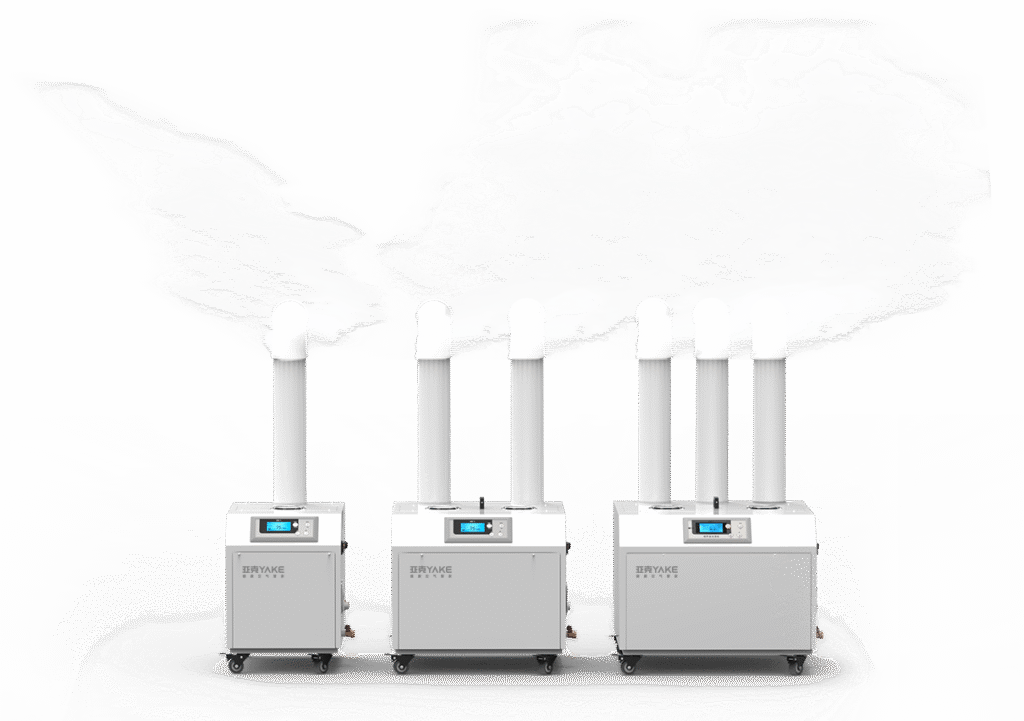
Types of Humidifiers
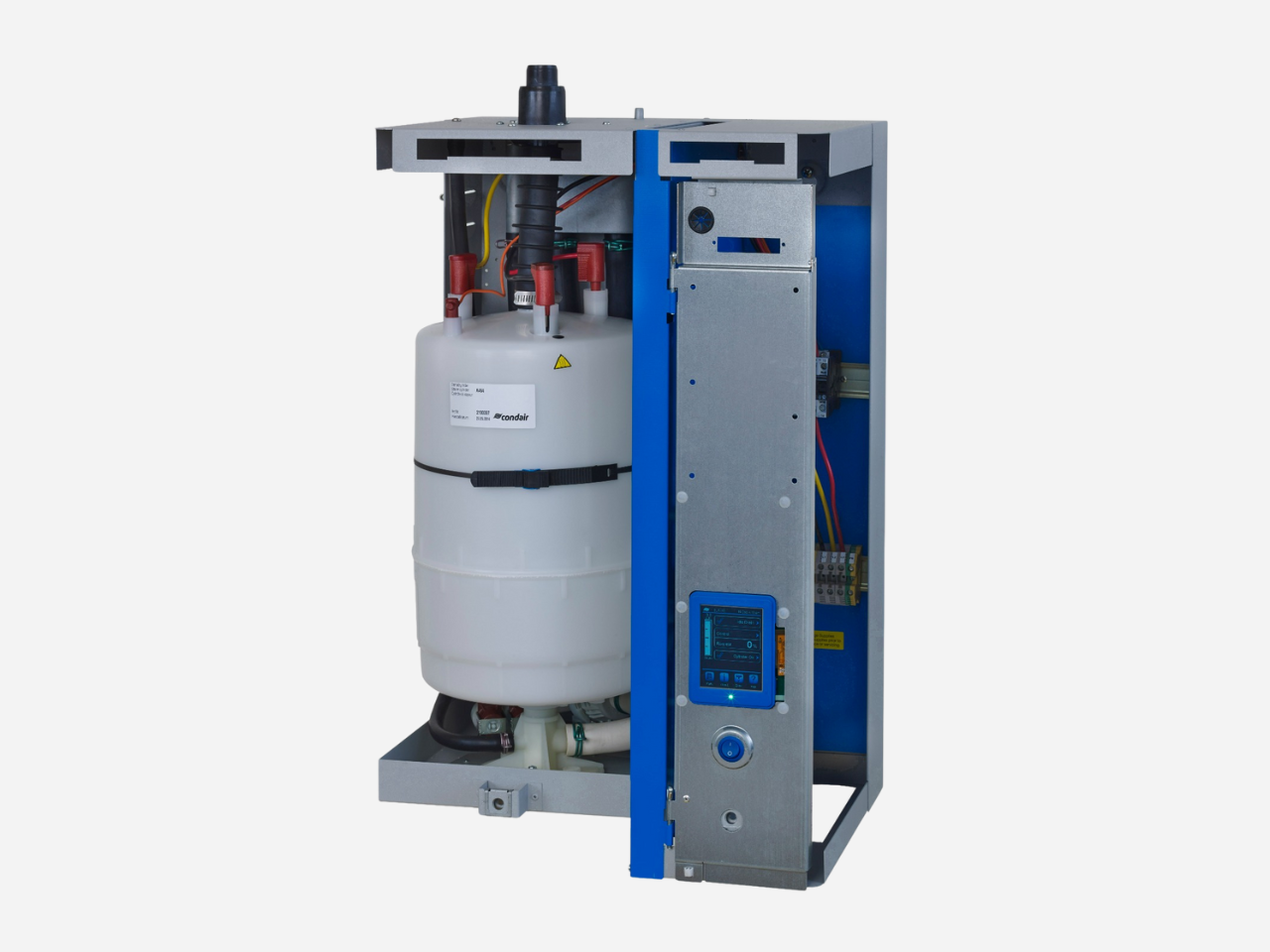
Steam Humidifier
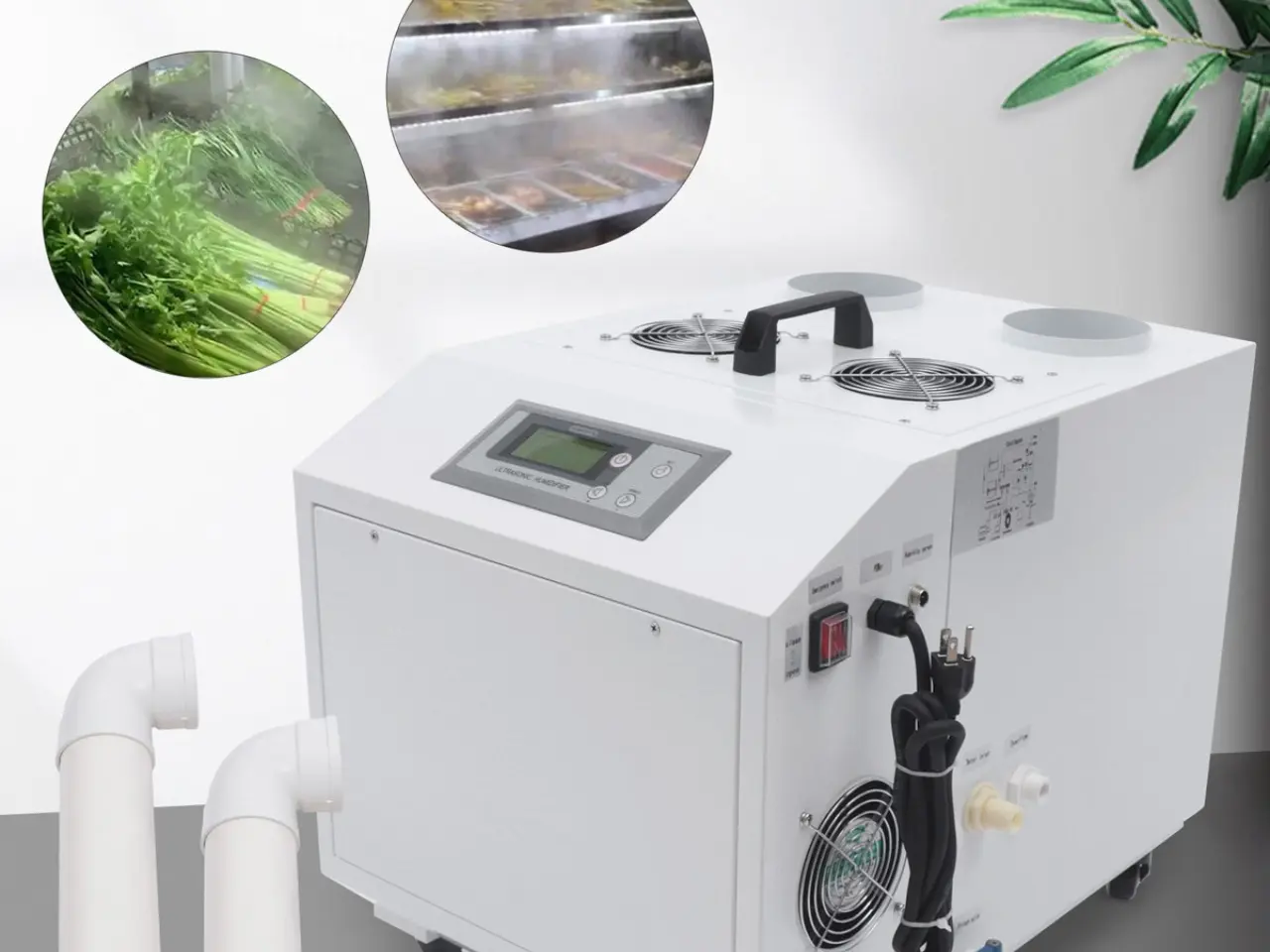
Ultrasonic Humidifier
Why humidity control matters in industrial and commercial buildings
In an air conditioned building in the UAE, the air reaching the workspace is often far drier than people expect. Cooling removes moisture as a by-product, so a space held at a comfortable temperature can sit well below the humidity range that materials and processes need. Outdoor humidity here is high, but conditioned indoor air frequently is not.
For a home that means dry skin and irritation. For a business it means something more expensive: paper that curls and jams, yarn that snaps, static that damages components, product that loses weight in storage, and finishes that will not cure evenly. Humidification is a process control measure before it is a comfort measure.
Industries that depend on controlled humidity
Printing and paper. Paper is hygroscopic. It takes on and gives up moisture with the surrounding air, and as it does it changes dimension. Sheets curl, registration drifts across a multi colour run, and static causes misfeeds. Print rooms are typically held around the middle of the humidity range for this reason.
Textiles. Natural and synthetic fibres both lose strength and become brittle in dry air. Yarn breakages rise, static increases, and fly and lint become harder to control. Spinning and weaving halls are usually run at the higher end of the humidity range.
Electronics and assembly. Dry air generates static, and static damages components in ways that often do not show up until later. Controlled humidity is one of the standard mitigations alongside grounding and ESD protection.
Storage and warehousing. Goods stored in dry air lose weight, and for anything sold by weight that is a direct financial loss. Timber, tobacco, food and paper products are all affected. Packaging and adhesives behave differently too.
Cleanrooms, laboratories and pharmaceutical production. Humidity is usually a specified and monitored parameter rather than a preference, and the system has to hold it within a defined band and record that it did.
Food production and cold storage. Correct humidity limits moisture loss from produce and helps maintain quality and shelf life.
Choosing the right type of humidifier
The two types described above suit different duties, and there is a third worth knowing about.
Steam humidifiers boil water and release sterile vapour. Because the water is boiled, biological contamination is not a concern, which is why steam is the usual choice for hospitals, laboratories and food production. Steam adds heat to the space, which matters when the same building is being actively cooled. It is the higher energy option but it is the most controllable and the most tolerant of variable water quality.
Ultrasonic humidifiers use a high frequency transducer to throw a fine cool mist off the water surface. They consume very little energy compared with steam and add no heat load. The trade off is that whatever is dissolved in the water goes into the air with the mist, so they need treated water. In a region with water as hard as the UAE’s, running an ultrasonic unit on untreated mains supply will produce white mineral dust across the space.
Adiabatic and evaporative systems pass air across a wetted surface or atomise water directly into the airstream. They use very little energy and produce a useful cooling effect as the water evaporates, which can be an advantage in a warm building. They need more attention to water hygiene and are usually specified for larger industrial volumes.
Which is right depends on the space, the moisture load, the water available, and whether added heat is a problem or a benefit. We would rather look at the application than recommend a technology in the abstract.
Sizing: calculating the moisture load
Humidifier capacity is expressed in kilograms of moisture per hour, and getting it right requires more than floor area. The calculation depends on the volume of the space, how many air changes per hour the ventilation delivers, the difference between the humidity you have and the humidity you need, the internal heat and moisture gains from people and machinery, and how leaky the building envelope is.
An undersized system will never reach setpoint and will run continuously trying. An oversized one will cycle badly and can cause condensation on cold surfaces, which creates a different problem entirely. Both failures are common and both are avoidable at design stage.
Water quality is the critical detail in this region
This is the single point most often underestimated on UAE installations. Water here carries a high mineral content, and every humidifier type is affected by it.
Steam units scale up internally, which reduces output and eventually damages the cylinder or element. Ultrasonic units disperse the minerals into the room as fine white dust that settles on stock, equipment and surfaces. Evaporative systems accumulate deposits on the wetted media, which reduces performance and creates a hygiene risk.
Specifying water treatment alongside the humidifier is not an optional extra here. It is the difference between a system that performs for years and one that becomes a maintenance problem within months.
Installation and integration
Humidifiers can be installed in the air handling system, so moisture is distributed through existing ductwork, or as in space units serving a specific area directly. Ducted installation gives more even distribution and keeps plant out of the working area. In space units are simpler and suit a single hall or a defined zone.
Either way the system needs a water supply, a drain, an appropriate electrical supply, and control based on a sensor placed where it actually represents the space rather than somewhere convenient. Sensor placement is a surprisingly frequent cause of a system that appears to be misbehaving when it is simply measuring the wrong air.
Maintenance
Humidifiers are water systems and they need servicing like water systems. Steam cylinders and elements need descaling or replacement on a schedule set by water hardness and running hours. Ultrasonic transducers and reservoirs need cleaning. Evaporative media needs inspection and replacement. Filters, drains, valves and sensors all need periodic checking, and sensor calibration matters because a drifting sensor quietly holds the space at the wrong level.
Climatech services humidification systems as well as supplying and installing them.
Frequently asked questions
What humidity level should my facility hold?
It depends entirely on the process. Printing, textiles, electronics and food storage all have different requirements, and some are specified by a standard or a customer rather than chosen. Tell us the process and we will advise.
Will a humidifier make my building feel warmer?
Steam adds heat to the space. Ultrasonic and evaporative systems do not, and evaporative systems produce a slight cooling effect. In an actively cooled building that difference is worth considering at selection.
Why is there white dust around my ultrasonic humidifier?
Dissolved minerals from untreated water being dispersed with the mist. It is a water treatment problem rather than a fault with the unit.
Can one system serve a whole facility?
Sometimes, through the air handling system. Where different areas need different levels, zoned or separate units are usually the better answer.
Do you supply for homes as well as industry?
Our focus is commercial and industrial applications where humidity affects a process or a product. Get in touch with what you need and we will tell you honestly whether we are the right supplier.
Talk to us about your facility
Call +971 54 574 2443 or email info@climatech.ae with the type of facility, the approximate volume of the space, the humidity level you need to hold, and what is happening now. That is enough for us to advise on capacity and the right technology.
If your problem is too much moisture rather than too little, see our dehumidifiers. For outdoor and semi-open areas where evaporative cooling is the goal, see misting systems. For the cool mist option in detail, see ultrasonic humidifiers.
About Company
Since 1995, Climatech has been a pioneer in air treatment solutions including humidification, dehumidification and misting systems, as well as solar and electric water heating and MEP works. Climatech UAE operates from Dubai, serving clients across the Emirates.